
Chaos contained

Reducing waste in good taste

The art of the pivot

Precision, hand delivered
On-brand, in-hand, and ahead of the curve
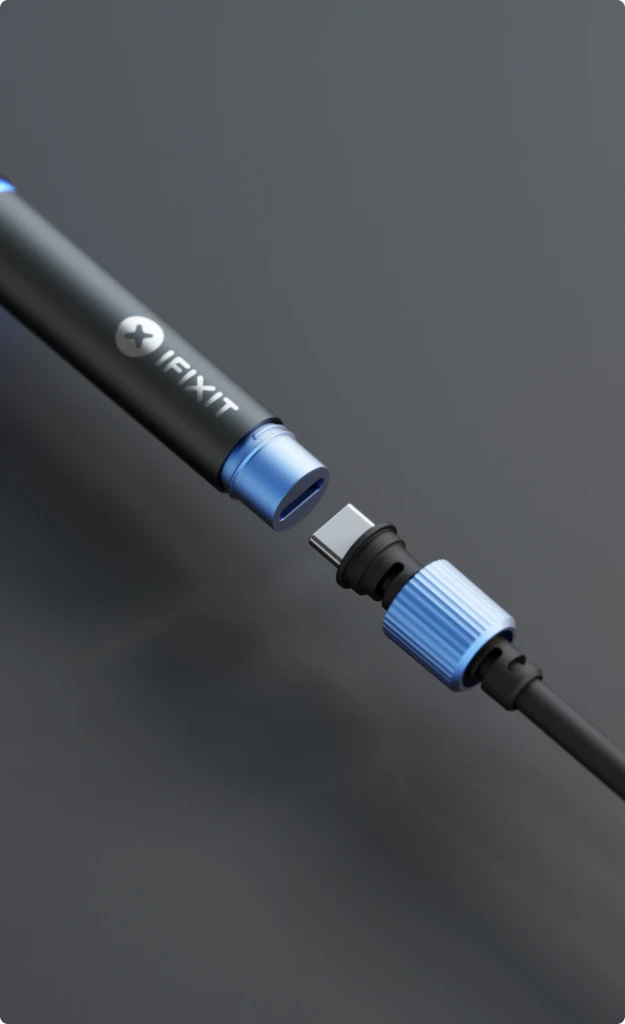
This soldering iron slots straight into iFixit’s ecosystem – but it doesn’t just blend in, it levels up. We dialled in a design language that speaks fluent iFixit: clean, honest, and purpose-built. But then we sharpened the edges, refining every curve and contour to create a tool that feels as good as it looks.
It’s sleek without being flashy, smart without being complicated, and comfortable enough to disappear in your hand when you’re in the zone. A quiet achiever, by design.

Fix, don’t flick
This tool isn’t just for soldering – it’s for starting a movement. We designed it to champion repair over replacement, to make fixing feel less like a chore and more like a flex.
From tight component work to quick fixes, it empowers users to extend the life of their gear and stick it to planned obsolescence while they’re at it.

Sharp where it counts
This isn’t some watered-down consumer gadget pretending to be pro. It’s built from the inside out for speed, accuracy, and finesse. Instant heat-up, surgical control, and a tip that means business—it’s the kind of tool that turns first-timers into lifelong fixers. It’s precision with punch.
The repairable repair tool
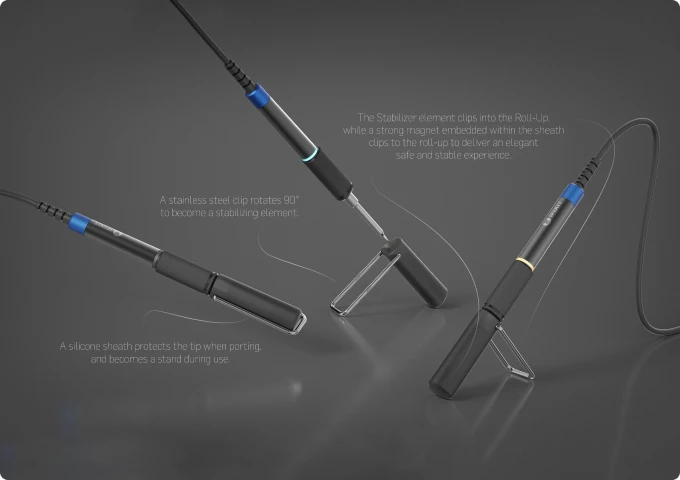
Here’s a wild idea: what if the tool you use to fix stuff was also… fixable? Radical, we know. This soldering iron was built with disassembly in mind. Modular components, no proprietary traps, and screws where screws should be.
Because repairability shouldn’t stop at the things you’re working on – it should include the tools you’re working with.

Beauty in the details, purpose in the form
This is what happens when nothing’s left to chance. From the anti-roll geometry to the grip-enhancing textures, every aspect of the soldering iron was obsessively refined—not just to look sharp, but to work smart.
The body shape fits naturally in the hand; the surface finishes feel precise, not precious. It’s design that disappears in use, but rewards a closer look. No fluff, no filler – just form that follows real function, beautifully.

“Like the soldering iron they helped design, the team was fast, responsive, and highly skilled. They quickly grasped our users' needs and delivered an intuitive, user-friendly design with impressive efficiency.”
brett hartt /// chief engineer, ifixit
The process behind the precision
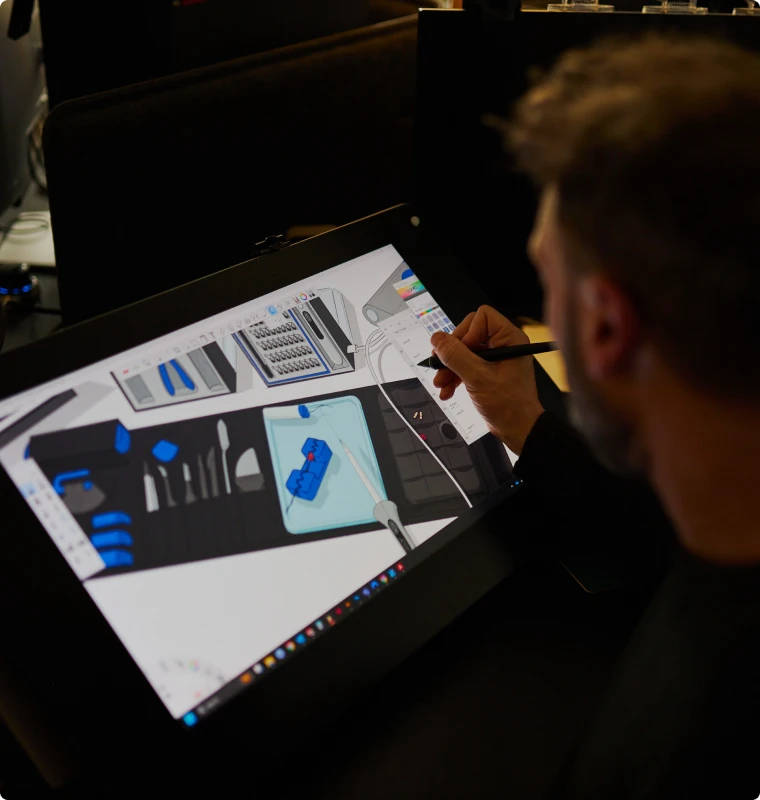
This was a hands-on, iterative process from day one. We 3D printed. We tested. We refined. Getting the in-hand feel just right meant building and evaluating physical prototypes, over and over, because designing for use means designing in context.
We also zoomed out to think system-wide: how this tool integrates into iFixit’s ecosystem, how it stores, travels, and complements the broader kit. It’s the kind of process that doesn’t always show up in the final form, but it’s there in every detail.



A collaboration that’s more than cosmetic
This project wasn’t about ticking boxes. It was about designing a tool that means something – to the user, to the planet, and to a repair-first culture.
Together with Spanner PD and iFixit, we turned an idea into a tool that does more than solder – it shifts mindsets. One fix at a time.

Related Projects
KOR WATER ///
GROVE ///
Explore more work

The art of less
Reducing waste in good taste
Lunch, Made with Love
Omie wanted to bring more families into the OmieBox community through a lower price point, without giving up the care they’re known for. The brief was a lunchbox for kids aged three and up, lighter than the original and built around cold lunches, with all the playfulness and consideration of the OmieBox.
OmieBox Lite is what we came back with. It’s smaller, the forms are softer, and there’s a little compartment in the lid, the Treasure Pocket, for a note or a treat. It’s a small thing, but it was the heart of the project for us and for Omie: a way for a parent’s love to show up in the middle of the school day.
Lite in More than Name
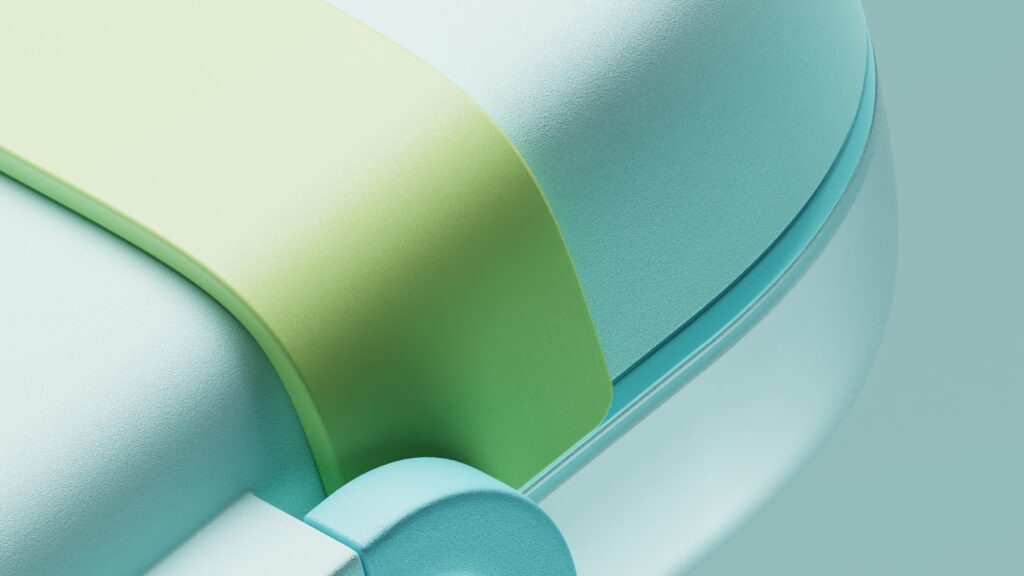
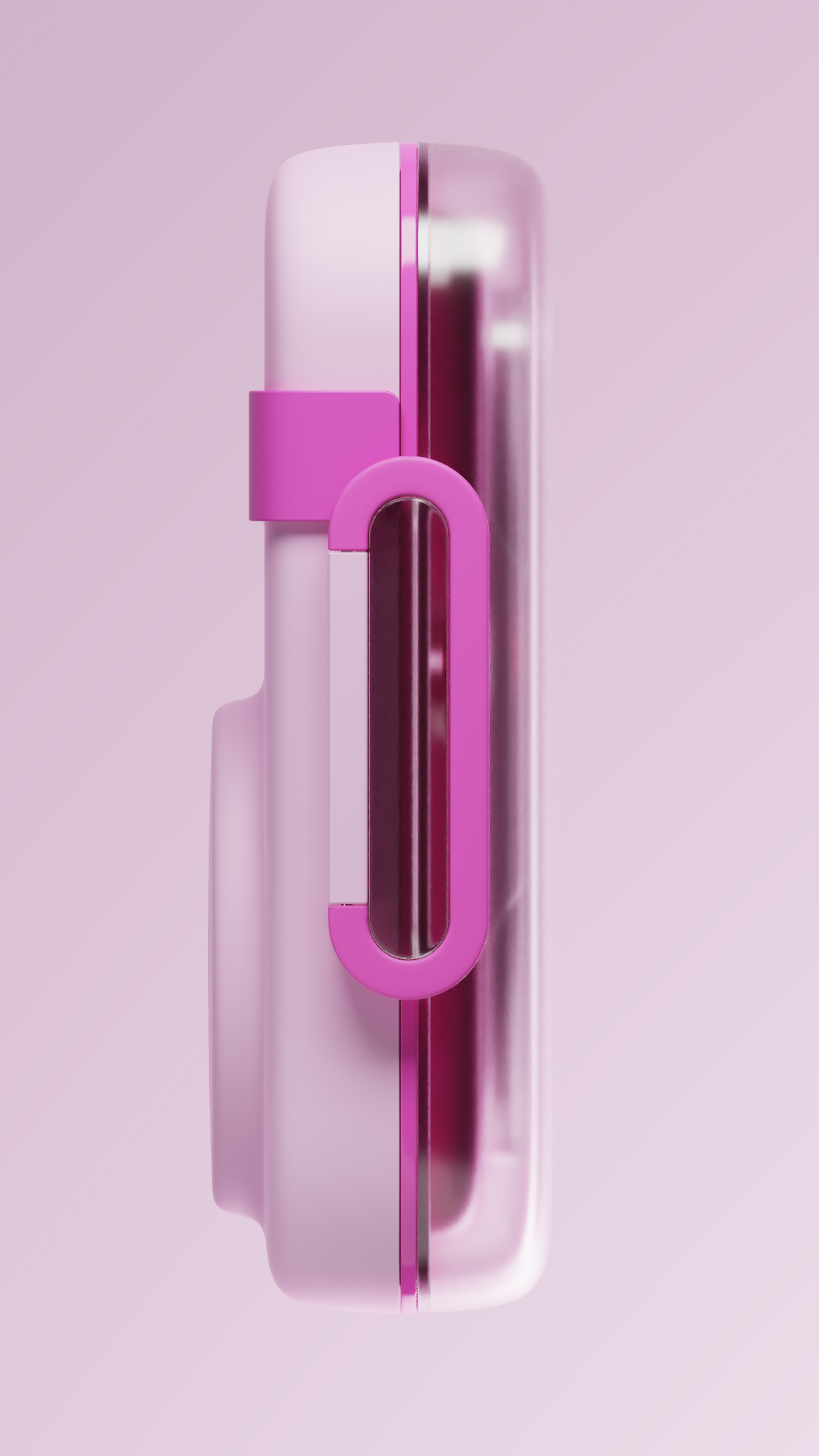
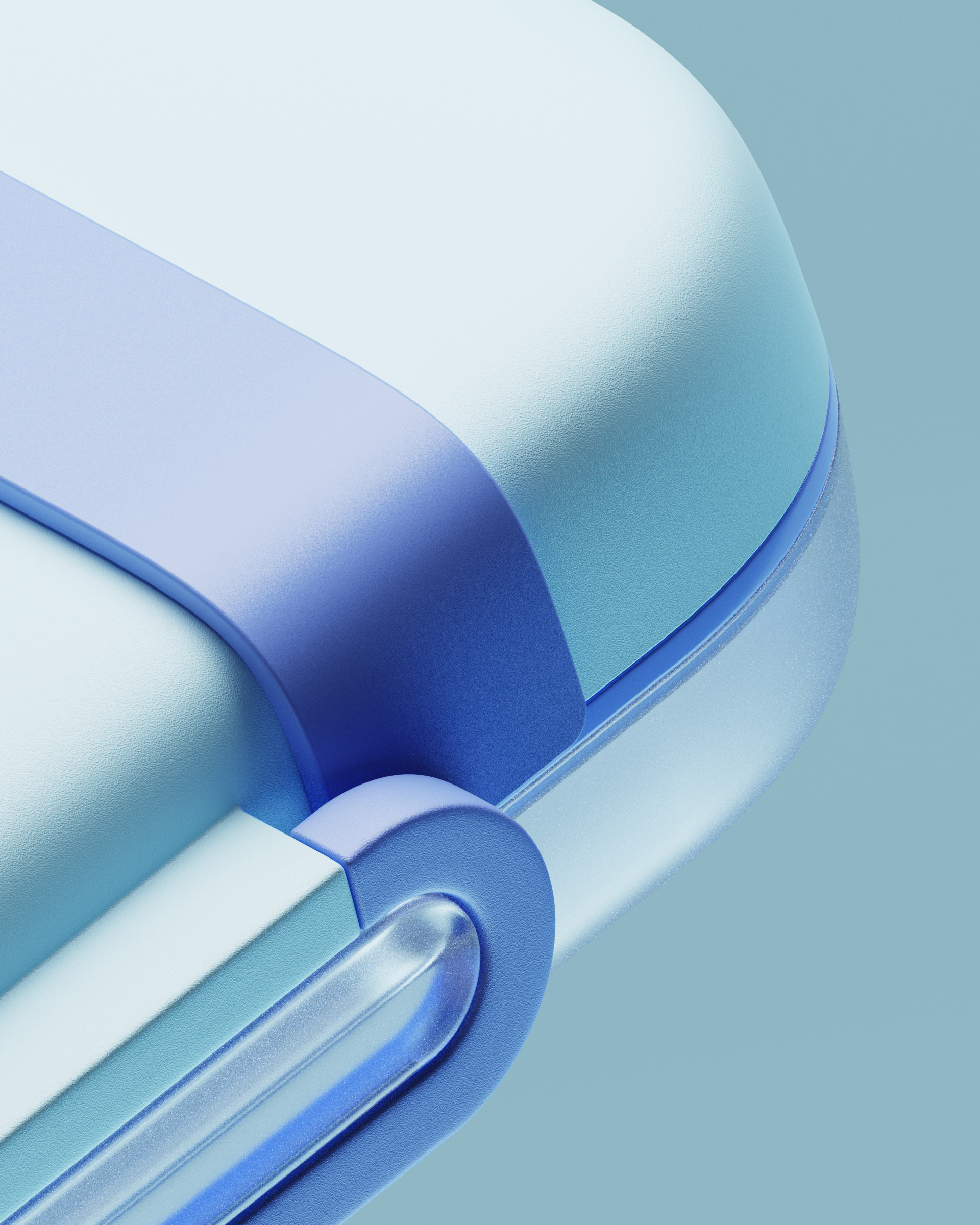
“Lite” came up a lot during the project, and it didn’t always mean the same thing. It started with weight: a smaller, lighter box than the original OmieBox. But the word kept pulling us toward the other kind of light, and that shaped the CMF. We gave the box a translucent outer shell and bright, opaque inners, so the color sits inside and light passes through to reach it. It gives the box a depth that solid color can’t, and it makes the object feel lighter than it is. Lite was the brief. Light was what we found in it.
Everything in Its Place
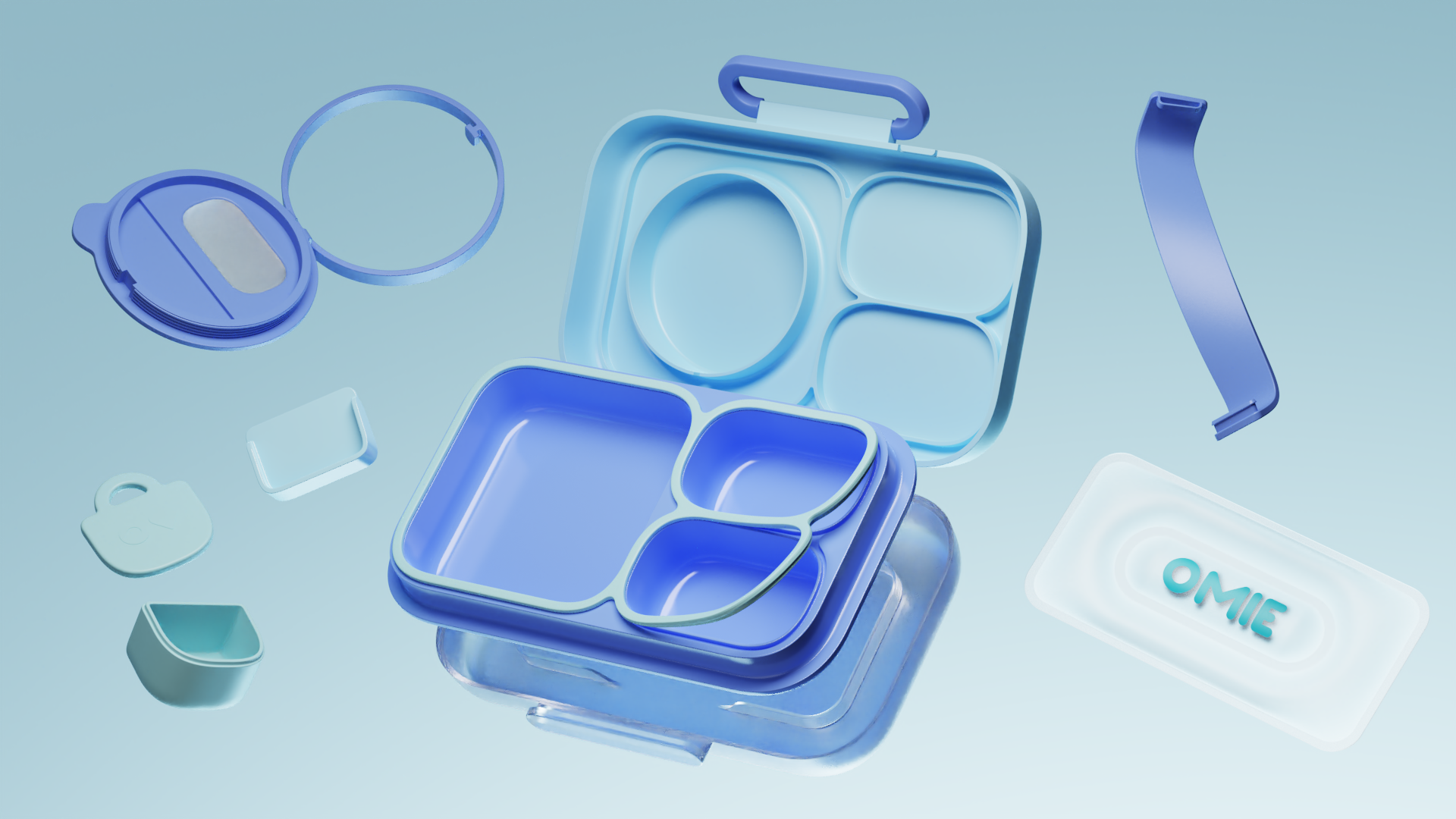
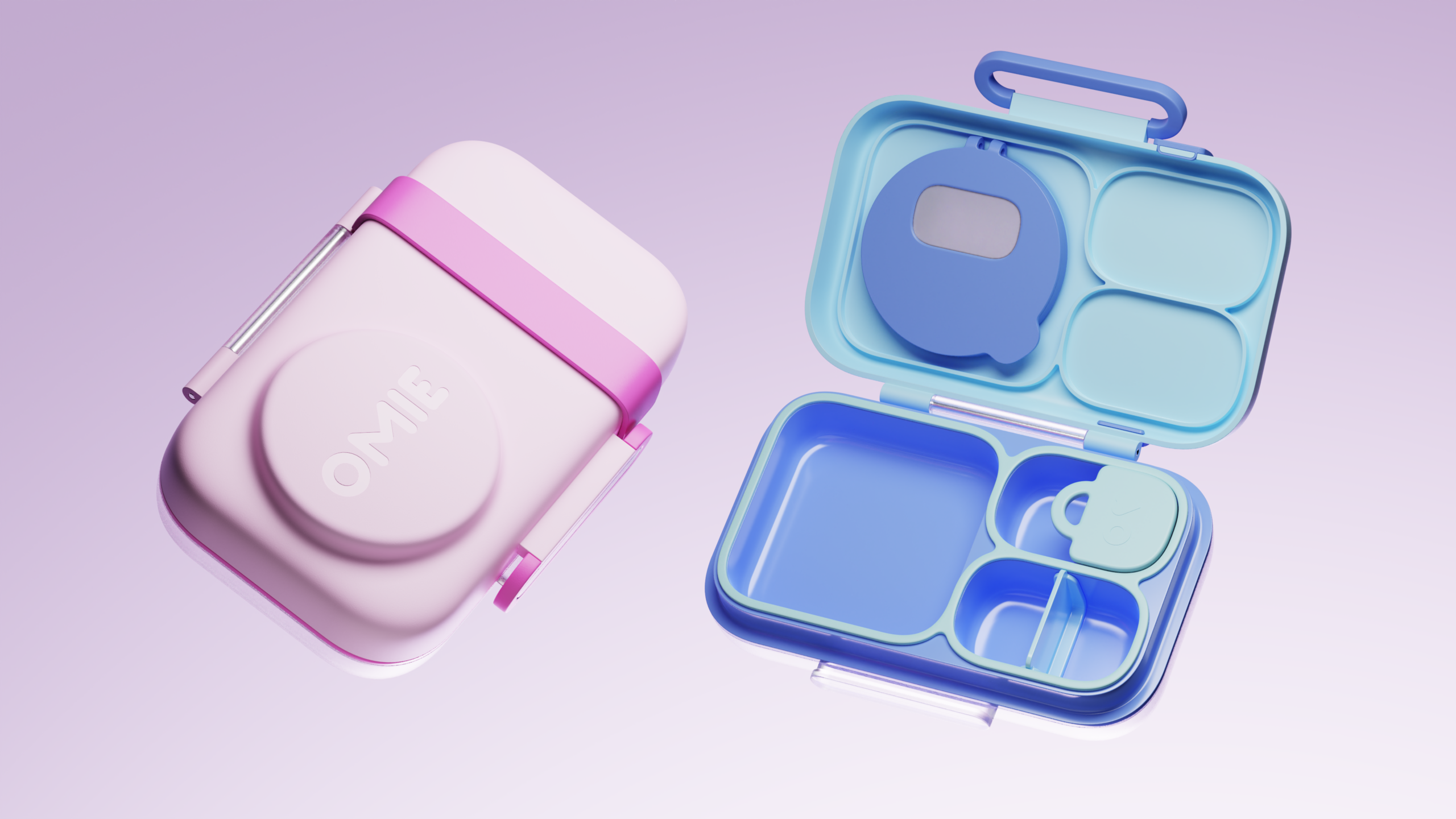
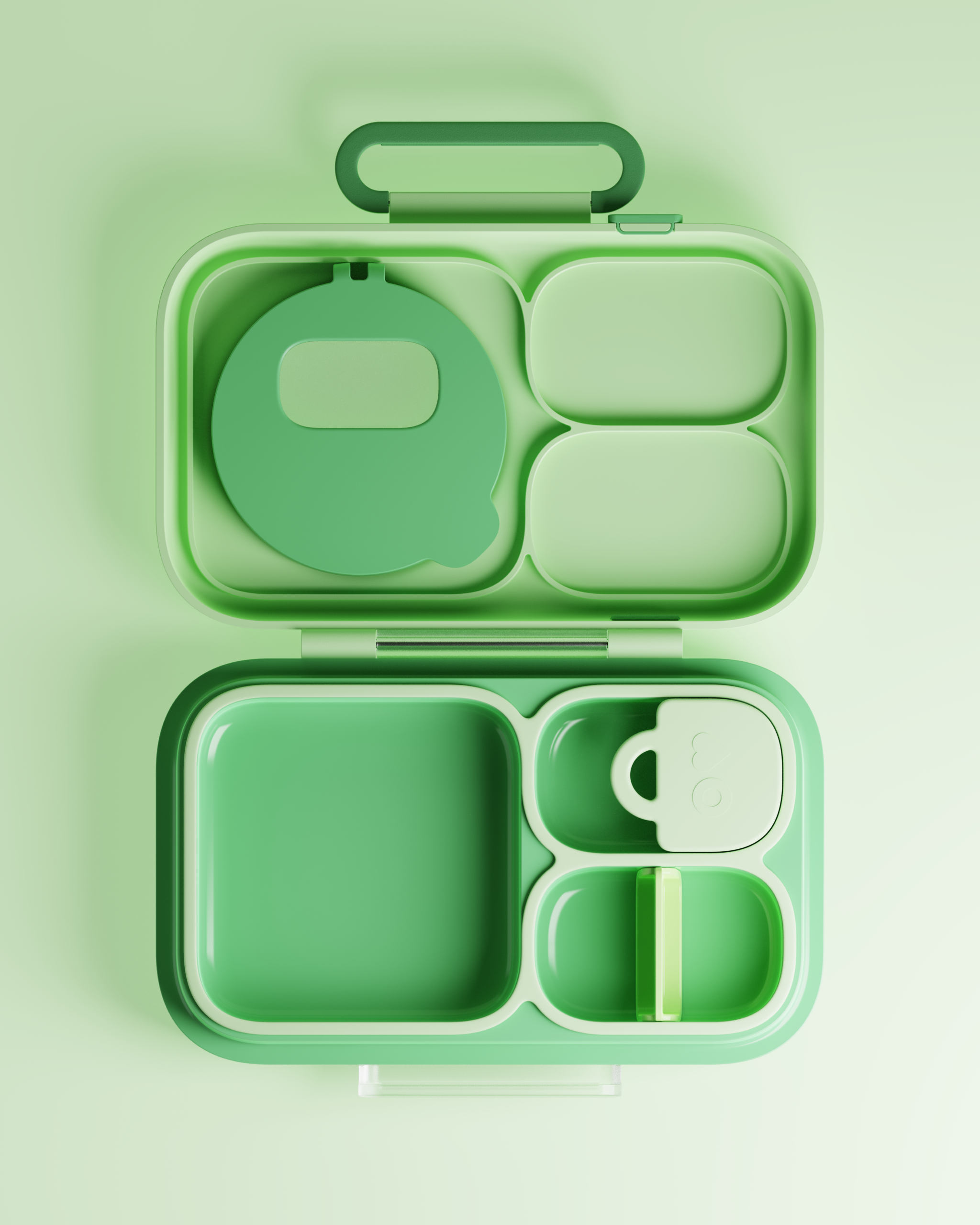
Before we drew anything, we spent time with parents and kids to understand how school lunches really get packed, carried and eaten. One thing came up again and again: parents wanted to pack a variety of fresh fruit, and not only for nutrition. Berries, grapes and other bright fruit were how they made a lunch look colourful and inviting. That shaped the layout. The main section is sized for a healthy sandwich, the tubs and dividers give the fruit somewhere to go, and the Treasure Pocket was designed with a cookie or a little treat in mind. A balanced meal for the tummy and the eyes. Every piece can be used or left out depending on what’s for lunch, so parents can set the box up around the food they’re packing, and kids get a box they can open, eat from and close again on their own.
Made to Be Felt
We started with sketches, working through ideas for what a lighter OmieBox could be. The strongest ones were pulled together into a single direction and refined on paper, and from there we moved quickly into 3D prints. We wanted physical models early because so much of this product is sensory. The sound and feel of a clip closing, the resistance in a hinge, the small moment of opening the Treasure Pocket. Those are the details that make a lunchbox something a kid looks forward to opening, and you can’t judge them on a screen. Getting prints in front of Omie’s team meant we could all pick them up, open and close them, and tune those moments until they felt right.
A Note from Home
How do you pack love? That was the question behind the Treasure Pocket™. It sits in the middle of the lid, just big enough for a treat, a sticker or a handwritten note, and it works like a little message from home. In a world where kids are surrounded by screens, there’s something special about a folded note in a parent’s handwriting, a reminder in the middle of the school day of how much they mean to someone. The practical side still mattered. It had to stay shut in a school bag but open easily for small hands without help, and inside, we made sure there was room for a decent-sized cookie.
Nothing Left Behind
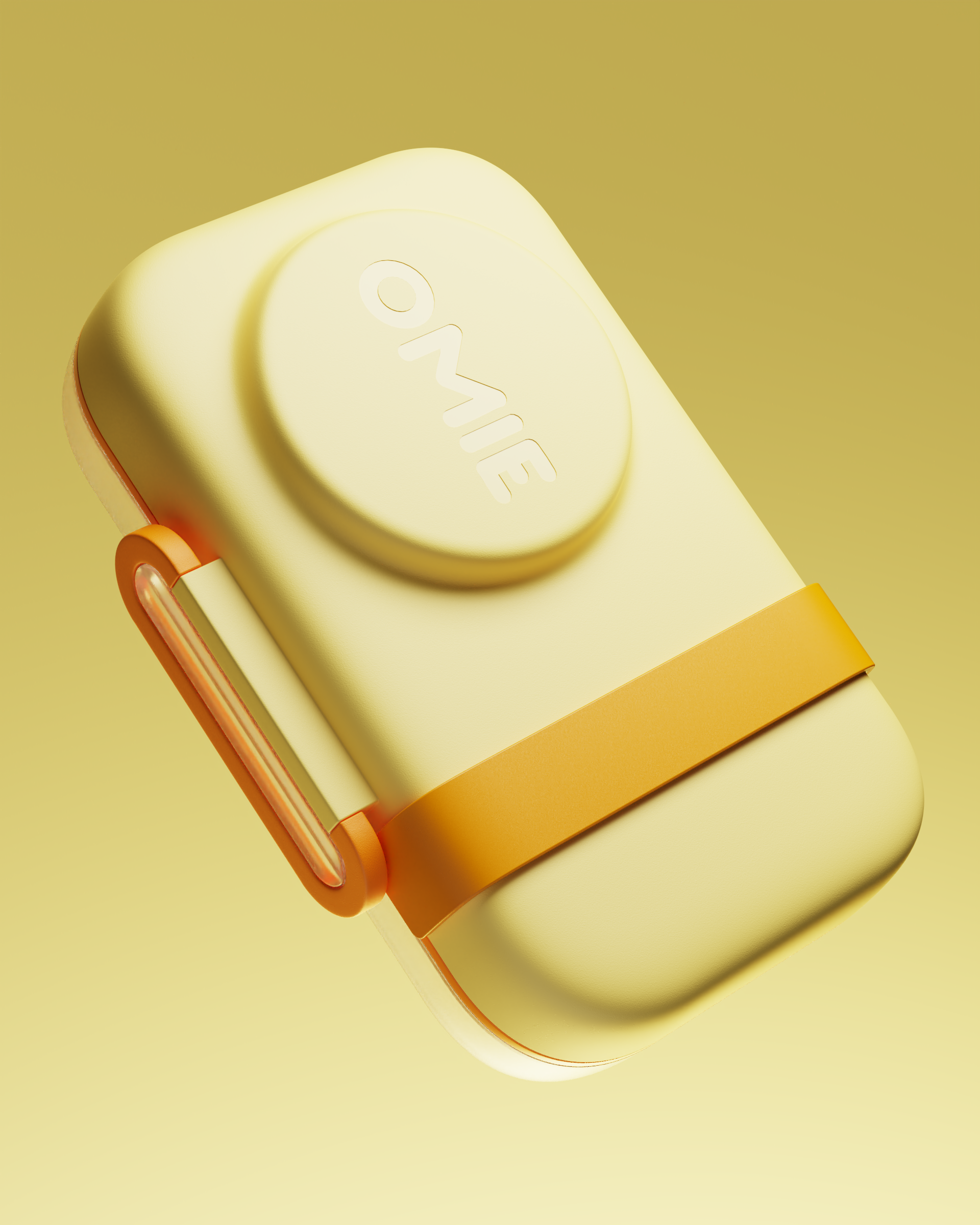
A strap runs across the top of the lid and can be put on or taken off quickly. On the practical side, it holds the extras: a fork, a napkin, a granola bar. The small things travel with the lunch instead of ending up loose at the bottom of a school bag. But it was always meant to be playful too. In a contrasting colour, it gives the closed box a bright band that’s easy to spot, and it’s something kids can’t help touching, pulling and fiddling with. Like the clips and the Treasure Pocket, it’s one more small moment of feel built into the box.
Keeping Its Cool
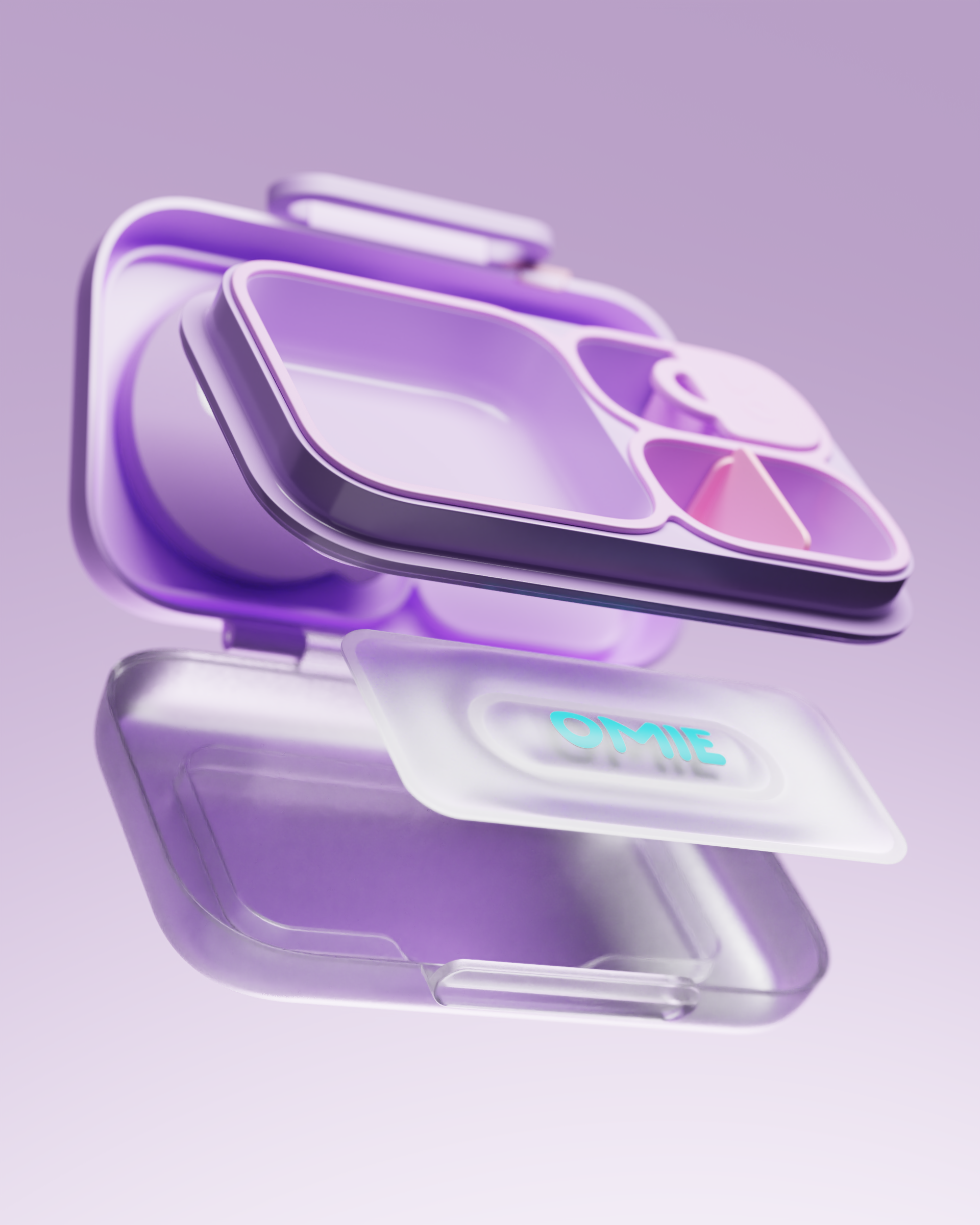
The original OmieBox is known for hot lunches, with a built-in thermos that keeps food warm until lunchtime. OmieBox Lite gave Omie the other half of the year. It’s built for cold lunches and summer days, keeping fresh food fresh and fruit looking as bright at noon as it did when it was packed. The ice pack sits in its own spot underneath the inner tray. It’s frozen flat, slots in below the tray and keeps the whole lunch cool until it’s time to eat. Getting to it is simple: lift the tray out of the shell and the ice pack is right there, ready to go back in the freezer.
Made for the Washing Up
OmieBox Lite was designed for two very different people. Kids get the colors, the clips and the Treasure Pocket. Parents get everything that happens before and after lunch: packing it in the morning, and washing it at night. For them, clean-up was the clear priority. The Treasure Pocket lid, the strap and the inner tray all come apart by hand, and the silicone seal pulls away, so there’s nowhere for crumbs to hide. The inner tray can go on the top rack of the dishwasher. And if a part wears out or goes missing, it can be replaced on its own, so the box doesn’t need to be thrown away.